
Boy from Chinese peasant family gets plucked from obscurity and is sent skyrocketing onto ballet stages. Boy travels to America, achieves stardom and falls in love, but is facing a forced return to his homeland. Boy faces dilemma – will he ever see his family again?
That essentially wraps up Mao’s Last Dancer, which is based on the true story of Chinese ballet dancer Li Cunxin (played by Chi Cao).
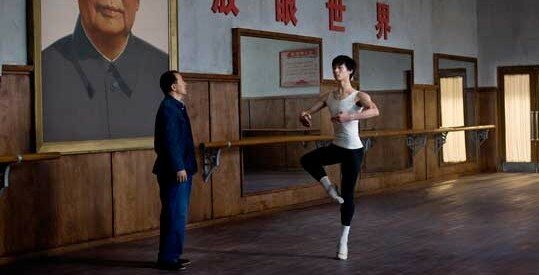
During the oppressive Mao era, Li was selected from his small, hardworking village to attend dance school in Beijing. As the film suggests, everything one did in life was dedicated to China, Mao and the Red Army. Any deviation from complete dedication to the communist cause was not looked upon favourably. In the 1970s Li was allowed to travel to America to dance with the Houston Ballet Company under Ben Stevenson (Bruce Greenwood), and eventually defected from China in a dramatic stand-off in the Chinese Consulate. (Interestingly, today Li lives in Australia with his wife and three children.)
|
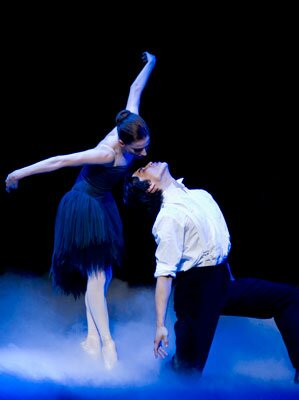
Cao performs admirably as both actor and dancer, while familiar face on the ballet-film scene Amanda Schull (Centre Stage) plays Li’s American love interest and first wife Elizabeth Mackey. Stevenson is also enjoyable to watch in his role of the Houston Ballet Company artistic director – the quasi-father figure he plays to Li seems to suit him perfectly. Other actors – and I say actors lightly, as most are actually dancers – do their job without fanfare.
In fact, I think it is fanfare that the film lacks. It is a compelling story, but at times it is just not told in a compelling-enough manner. The emotion is there – Li’s determination to dance, his insistence on staying in America, and his fear for his family – but is often weak and awkward, much like Li’s adaption to American society. His naïve grasp of language and culture provides some light hearted elements in the film, and his fear of capitalism and speaking out against the government highlights the restriction indoctrinated into people under Chairman Mao. Yet difficult issues are dealt with lightly, while clichéd metaphors and flashbacks mar what could have been an incredibly insightful film. The story is deep and emotional, but the film lacks the drama and passion that would really elevate its status. It is not necessarily a bad film – it is just not what it could be.
That said, there was scattered applause in the packed out cinema as the credits started to roll. Maybe I just missed something?
Verdict:
I feel like if I was 30-plus and/or had gone through the ‘when I grow up I want to be a ballet dancer’ stage as a kid then I would appreciate this one more than what I do. The dancing is beautiful and the story is certainly there to be told – but perhaps reading Li’s autobiography will give you a more raw and compelling insight into his intriguing tale.